Introduction
Coloring pages cinnamoroll provide structured visual templates centered on the beloved Sanrio character, serving as effective instructional tools for developing early childhood visual-motor integration and fine motor control. According to the National Association for the Education of Young Children (NAEYC), purposeful manipulation of structured drawing materials significantly enhances young children’s bilateral hand coordination, pencil grasp precision, and spatial attention spans. Integrating these specific character templates into daily instruction bridges high-interest visual culture with foundational cognitive development. Educators frequently utilize these resources alongside broader Coloring Pages collections to maintain steady engagement while strengthening targeted wrist dexterity.
Visual Learning & Skill Snapshot:
- Core Focus: Utilizing character-themed graphic outlines to refine hand-eye coordination and spatial coloring control.
- Target Skill: Fine-motor proportion, edge awareness, and visual discrimination of complex curved outlines.
- Key Recommendation: Pair high-contrast printed character outlines with varied tactile writing instruments to challenge diverse grip styles.
Core Principles and Learning Overview
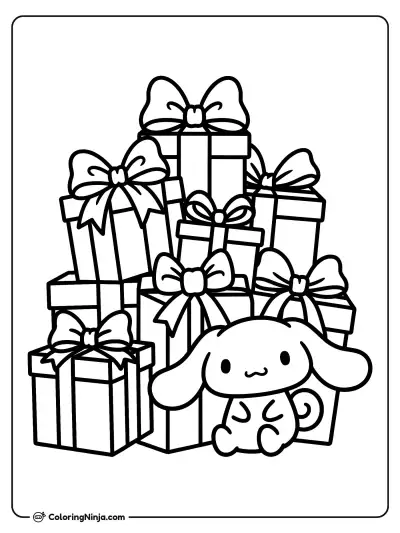
Coloring pages cinnamoroll support early learners by presenting distinct, rounded geometric shapes and soft facial features that encourage deliberate, controlled strokes rather than erratic scribbling. The character’s signature large ears, prominent circular eyes, and simple blue-and-white color palette create ideal boundaries for teaching children how to manage line containment and color saturation. As children navigate the contours of the puppy’s fluffy silhouette, neural pathways governing visual-spatial orientation and hand-eye coordination receive repeated, low-stress activation. These sheets function seamlessly within comprehensive Drawing Worksheets curricula designed to transition young artists from passive tracing to active proportional observation.
Key Specifications and Breakdown
| Age / Learning Stage | Visual Skill & Ratio | Pedagogical Application & Scaffolding |
|---|---|---|
| Early Preschool (Ages 3-4) | Thick outer borders, low detail density | Focuses on gross motor arm movements and basic color-to-area matching within primary shapes. |
| Late Kindergarten (Ages 5-6) | Moderate line variation, facial feature isolation | Targets pencil grip precision, edge retention, and intentional shading choices. |
| Early Elementary (Ages 7-8) | Intricate background accessories, scaling ratios | Encourages pattern integration, cross-hatching, and independent creative composition. |
Structured graphical templates with clear spatial boundaries significantly improve visual-motor integration and sustained attention span during early childhood development tasks. — National Art Education Association (NAEA). Related guide: Coloring Pages Princess.
Step-by-Step Practical Application and Guidelines
Executing coloring pages cinnamoroll effectively requires deliberate preparation of workspace ergonomics, appropriate writing media, and progressive skill scaffolding. Begin by selecting high-resolution digital sheets printed on heavyweight cardstock to prevent bleed-through and paper buckling under marker pressure. Instructors should demonstrate proper tripod grasp positioning before allowing children to begin, emphasizing light pressure application along the character’s outer ear contours before filling larger torso areas. Following the coloring session, educators can extend the lesson by integrating related Printable Crafts that transform the finished colored figures into 3D puppets or classroom display banners.
Common Challenges and How to Avoid Them
Common challenges associated with coloring pages cinnamoroll include hand fatigue caused by excessive grip tension and frustration stemming from rushing past fine-line boundaries like the character’s facial features. Instructors can mitigate hand strain by substituting standard crayons with ergonomic triangular writing tools that naturally promote a relaxed tripod grasp. When children attempt to color too rapidly, introducing a temporary pacing rule—such as coloring one specific section, like an ear, completely before moving to another—restores focus and elevates overall neatness. Supplementing these exercises with structured Art Activities helps reinforce patience and deliberate artistic pacing across all mediums.
💬 Frequently Asked Questions
Conclusion and Next Steps
Implementing structured character-based visual exercises provides a reliable method for fostering fine motor control, patience, and creative expression in early childhood and primary education settings. Educators and parents seeking to expand their instructional toolkit can explore an extensive collection of complementary resources designed to support comprehensive childhood artistic development at ColorLeaf Studio.
Printable Coloring Page Previews