Introduction
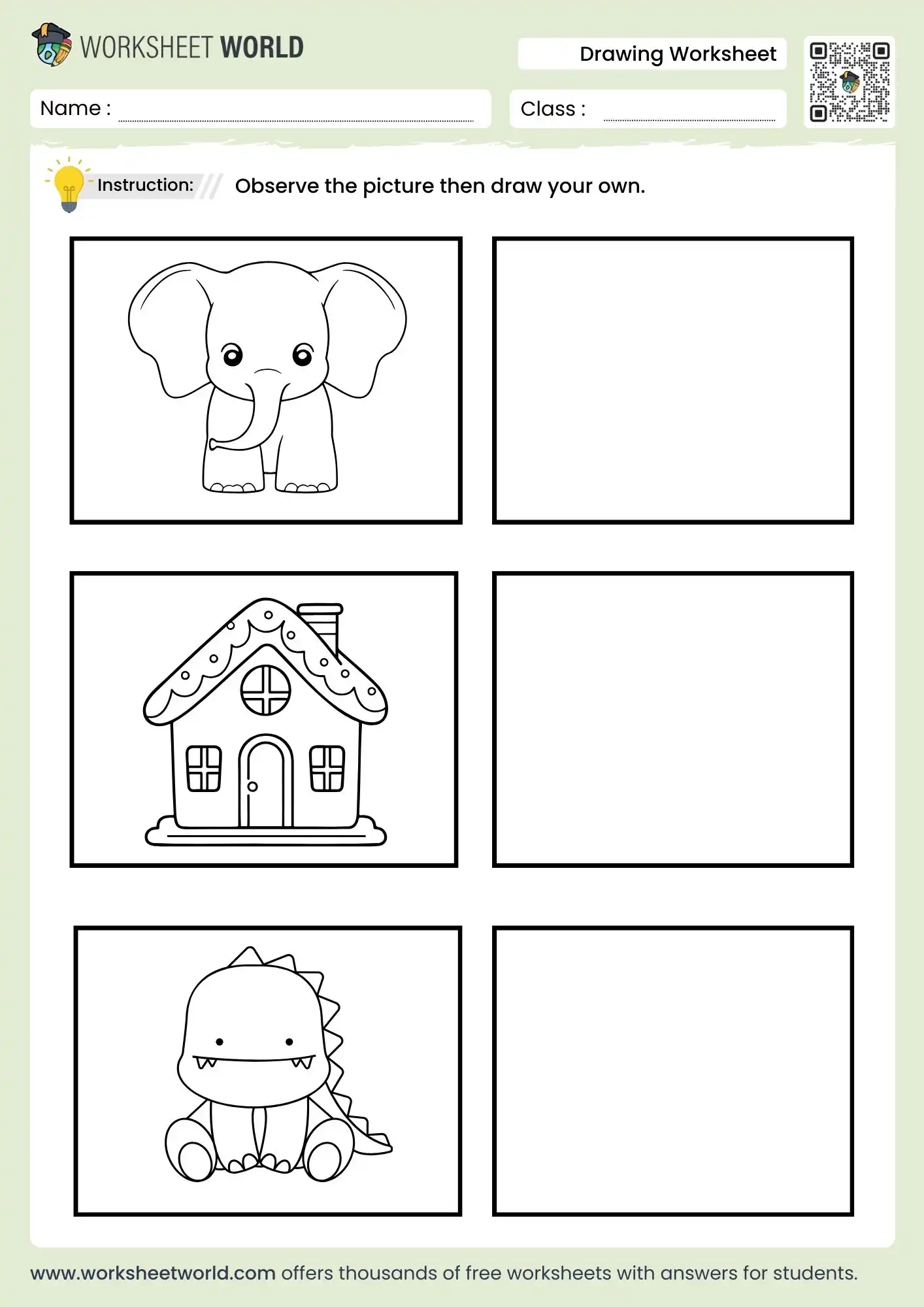
Drawing worksheets for grade 2 serve as structured cognitive frameworks that bridge early childhood scribbling and intentional graphic representation by targeting spatial awareness, fine-motor control, and geometric proportion. According to the National Art Education Association (NAEA), sequential visual arts instruction during early elementary education significantly accelerates visual-spatial literacy and cognitive problem-solving capacities. Utilizing targeted printable resources transforms open-ended drawing into a scaffolded practice where seven- and eight-year-old learners master line weight, symmetry, and observational accuracy. Integrating specialized educational tools ensures that children build the foundational confidence required for complex academic and creative tasks.
Visual Learning & Skill Snapshot:
- Core Focus: Structured graphic templates that guide second-grade students through observational drawing and spatial proportion.
- Target Skill: Fine-motor control, visual discrimination, overlapping shapes, and foundational perspective.
- Key Recommendation: Pair structured templates with open exploration by combining Drawing Worksheets with tactile creative exercises.
Core Principles and Learning Overview
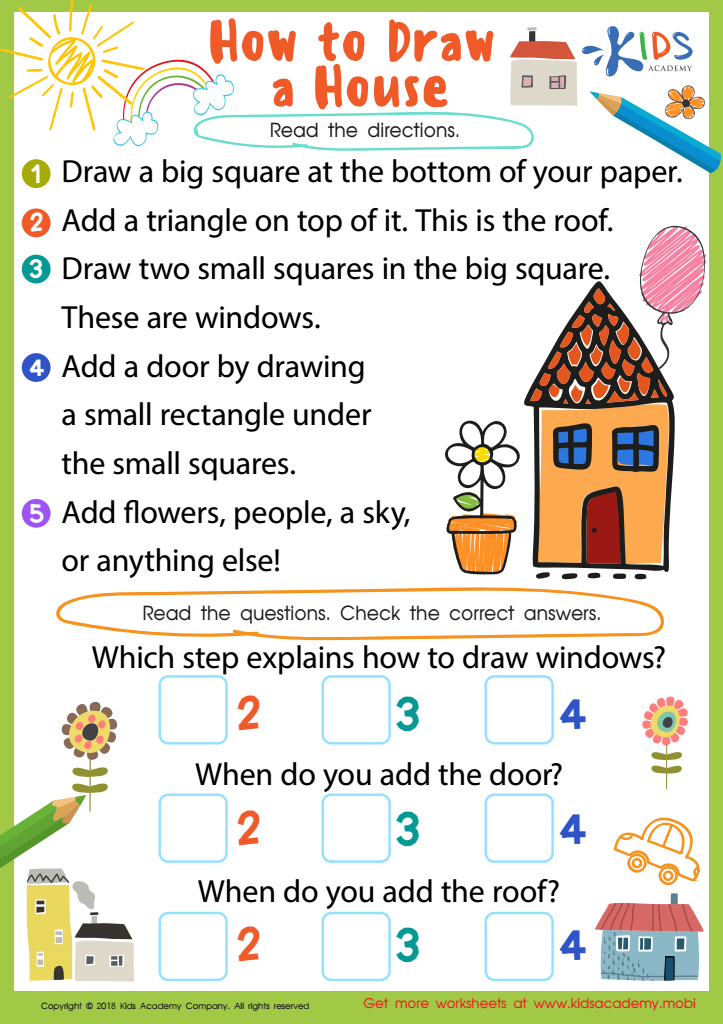
Second-grade drawing worksheets are specifically designed to meet the transitional developmental milestone where children move from schema-based symbols to dimensional representation. This cognitive phase requires materials that encourage breakdown of complex objects into manageable geometric shapes, such as cylinders, spheres, and polygons. Structured layout designs minimize cognitive overload by providing clear gridlines, step-by-step directional arrows, and comparative scaling models. Educators and parents utilize these exercises to cultivate patience, hand-eye coordination, and visual analysis, ensuring that young learners systematically decode the visual world instead of relying solely on memorized symbols.
Key Specifications and Breakdown
| Age / Learning Stage | Visual Skill & Ratio | Pedagogical Application & Scaffolding |
|---|---|---|
| Early Second Grade (Ages 7.0–7.5) | 1:1 scale matching & basic symmetry | Utilize grid-based duplication pages to anchor spatial awareness. |
| Mid Second Grade (Ages 7.5–8.0) | Overlap, negative space, & proportion | Deploy step-by-step sequential breakdown sheets for multi-part objects. |
| Late Second Grade (Ages 8.0–8.5) | Detailed rendering & observational nuance | Incorporate texture-mapping and contour-tracing templates. |
Structured visual arts curricula measurably enhance fine-motor precision and spatial problem-solving in elementary cohorts — National Art Education Association (NAEA)
Step-by-Step Practical Application and Guidelines
Implementing drawing exercises successfully requires establishing a predictable printing routine, preparing appropriate drawing instruments, and offering supportive instructional prompts. Educators begin by printing single-concept worksheets on heavyweight matte paper to withstand erasing and repeated pencil friction. Next, learners examine the designated reference model, tracing primary anchor points before executing freehand contour lines within the guided margins. Finally, students evaluate their completed compositions against the provided model to assess proportion and alignment. To expand creative exploration beyond paper templates, pairing pencil exercises with Art Activities reinforces spatial concepts through multi-sensory application.
Common Challenges and How to Avoid Them
Children frequently encounter frustration when attempting to render complex proportions without adequate scaffolding or when rushing through foundational guidelines. Mitigating this issue involves breaking intricate illustrations down into smaller geometric components and mandating light construction lines prior to committing to dark outlines. Furthermore, educators prevent hand fatigue and discouragement by monitoring grip pressure and providing soft graphite pencils alongside high-plastic erasers. Introducing playful Printable Crafts alongside traditional paper exercises also maintains engagement and relieves the monotony of pencil-and-paper drills.
💬 Frequently Asked Questions
Conclusion and Next Steps
Intentional graphic instruction lays an indispensable groundwork for both visual literacy and general academic achievement during the primary years. By supplying learners with well-structured instructional tools, educators foster a lifelong appreciation for design, structure, and creative expression. To expand the classroom or homeschool curriculum with supplementary creative materials, explore the curated collection of Coloring Pages available on the platform.
Worksheet Previews & Reference Materials