Introduction
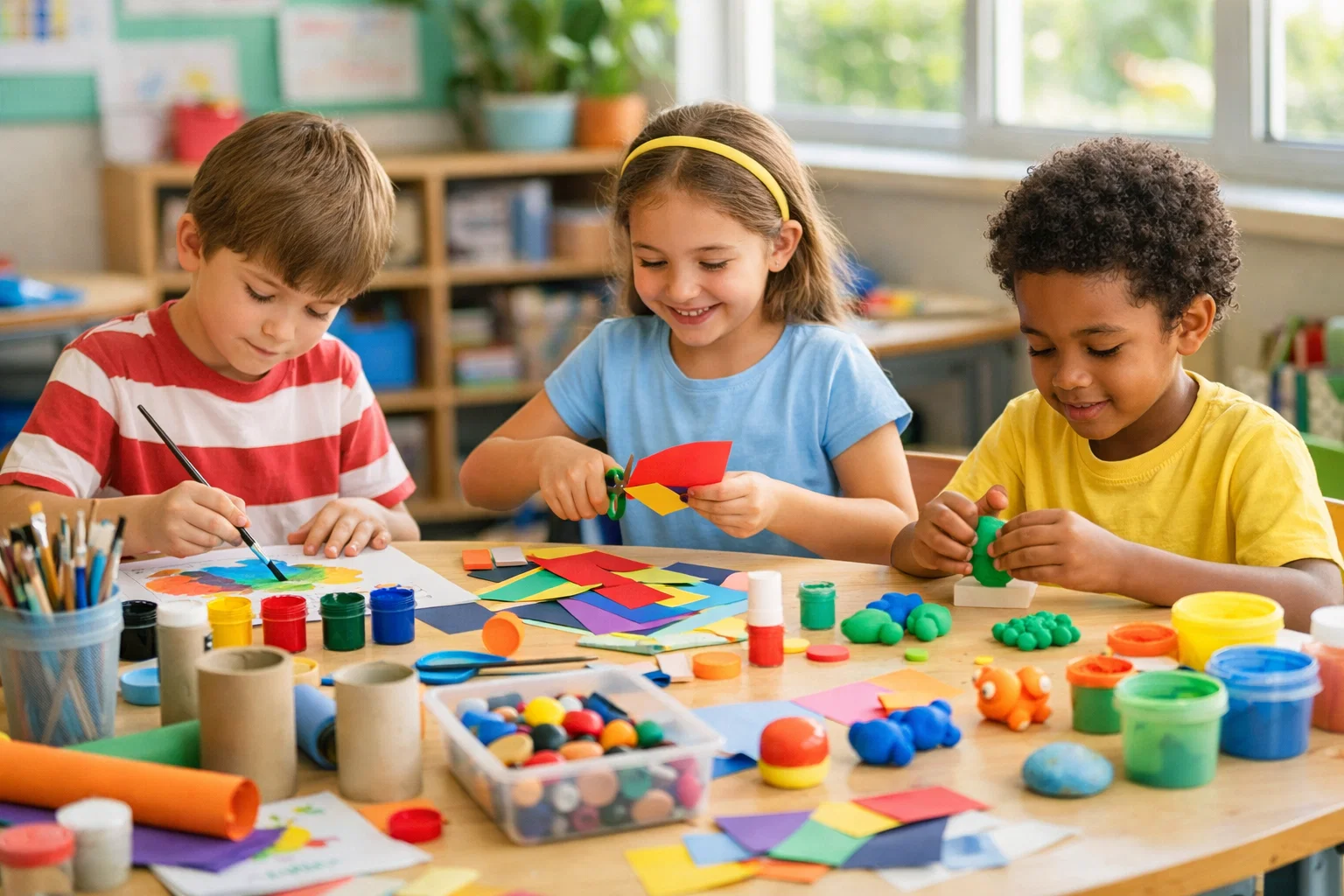
Art activities children engage in function as essential catalysts for early visual-spatial development, fine-motor control, and cognitive integration. According to the National Association for the Education of Young Children (NAEYC), hands-on creative experiences actively foster critical thinking, problem-solving, and emotional regulation during formative developmental stages. Integrating structured Art Activities within home and classroom environments provides young learners with the tactile engagement necessary to translate abstract concepts into concrete visual expressions. Resource collections designed specifically for educators and parents optimize this developmental trajectory by bridging open-ended creative exploration with foundational educational frameworks.
Visual Learning & Skill Snapshot:
- Core Focus: Structured creative projects that build motor dexterity and cognitive mapping through guided visual expression.
- Target Skill: Fine-motor proportion, spatial reasoning, visual discrimination, and hand-eye coordination.
- Key Recommendation: Pair open-ended visual tasks with structured Drawing Worksheets to reinforce structural accuracy and pencil grip.
Core Principles and Learning Overview
Art activities children execute provide a multi-sensory framework that systematically strengthens neural pathways associated with visual processing and bilateral coordination. Spatial intelligence and manual dexterity improve exponentially when young learners manipulate diverse media, trace precise contours, and assemble layered physical components. Educational materials that incorporate structured templates, such as specialized Coloring Pages, help children understand boundary recognition, color theory, and visual balance. By balancing unstructured creative freedom with guided technical tasks, educators ensure that children build both expressive confidence and rigorous mechanical control.
Key Specifications and Breakdown
| Age / Learning Stage | Visual Skill & Ratio | Pedagogical Application & Scaffolding |
|---|---|---|
| Ages 3-4 (Early Explorer) | Gross motor sweeps, color recognition | Use large-format outlines and thick crayons to establish basic grip strength. |
| Ages 5-6 (Transition Stage) | Bilateral coordination, contour tracing | Introduce detailed Printable Crafts requiring cutting and folding. |
| Ages 7-8 (Proficient Maker) | Proportional scaling, perspective | Involve grid-based drawing sheets and multi-step assembly tasks. |
Early childhood art experiences must prioritize process-based exploration over rigid product replication to ensure optimal cognitive and creative development. — National Art Education Association (NAEA)
Step-by-Step Practical Application and Guidelines
Executing effective creative sessions requires organizing printable resources, tools, and workspace environments to minimize frustration and maximize focus. Educators begin by selecting developmentally appropriate materials that match the current fine-motor capabilities of the group. Printouts should be produced on heavy-weight paper or cardstock to withstand repeated manipulation, painting, or gluing. Adults introduce the project by demonstrating proper tool handling—such as scissors, brushes, or pastels—before allowing independent exploration. Finally, displaying completed visual works within a dedicated gallery space reinforces achievement, self-esteem, and pride in sustained effort.
Common Challenges and How to Avoid Them
Frustration during visual arts tasks typically stems from developmental mismatches between expected precision and current neuromuscular control. When young learners struggle with complex lines or intricate cutting boundaries, adults should temporarily scale back complexity by providing simplified templates with thicker guide lines. Rushing through projects often occurs when instructions are overly verbal rather than visual; demonstrating the physical steps clearly bridges this gap. Providing adaptive tools, such as loop scissors or ergonomic grips, eliminates physical barriers and ensures every child experiences successful creative expression.
💬 Frequently Asked Questions
Conclusion and Next Steps
Implementing targeted creative projects builds a resilient foundation for lifelong visual literacy, academic success, and emotional well-being. Educators and caregivers can immediately expand their resource library by exploring structured Art Activities designed to inspire imagination and refine essential physical skills.
Visual Reference Gallery