Introduction
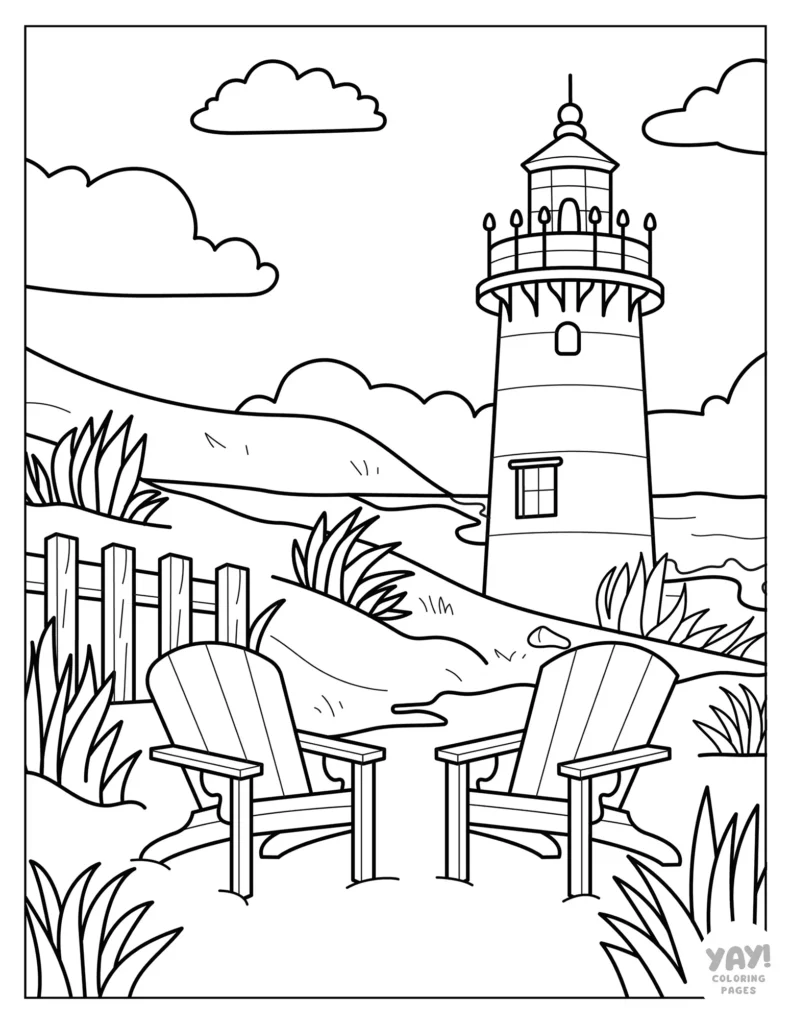
Coloring pages beach resources function as targeted visual learning tools designed to build fine-motor precision, spatial awareness, and marine ecosystem recognition through structured graphic templates. According to the National Association for the Education of Young Children (NAEYC), purposeful manipulation of writing and coloring implements on structured templates supports the development of crucial palmar and pincer grasps necessary for early literacy and visual art competencies. Integrating specialized coastal imagery offers children an engaging medium to explore organic forms, wave dynamics, and shore-dwelling biology while refining hand-eye coordination.
Visual Learning & Skill Snapshot:
- Core Focus: Coastal-themed graphic templates targeting fine-motor dexterity and environmental concept retention.
- Target Skill: Spatial reasoning, visual discrimination, fine-motor proportion, and color-theory application.
- Key Recommendation: Pair high-contrast linework sheets with multi-medium art supplies to challenge grip control and pressure variation.
Core Principles and Learning Overview
Coastal-themed visual templates provide an accessible entry point for early elementary learners to practice boundary adherence, value shading, and color blending. Utilizing structured Coloring Pages allows educators to establish deliberate foundational routines that bridge simple visual tracking with advanced graphic design principles. By analyzing shoreline elements—such as asymmetrical seashell spirals, receding wave patterns, and granular sand textures—learners process complex visual information by breaking intricate patterns down into manageable, compartmentalized coloring zones.
Key Specifications and Breakdown
| Age / Learning Stage | Visual Skill & Ratio | Pedagogical Application & Scaffolding |
|---|---|---|
| Ages 3–4 (Early Preschool) | Large contiguous shapes, thick outlines (3pt+), minimal visual clutter. | Encourages gross wrist movements, marker control, and basic color-to-object association (e.g., yellow sand). |
| Ages 5–7 (Kindergarten/1st Grade) | Moderate line density, horizon differentiation, organic textures. | Builds sustained focus, directional shading, and integration with broader Art Activities. |
| Ages 8+ (Early Elementary/Homeschool) | Complex interlocking patterns, negative space balance, micro-detail scaling. | Enhances precision control, observational rendering, and preparation for detailed Drawing Worksheets. |
Structured artistic templates directly scaffold cognitive planning by requiring children to pre-visualize color distribution, spatial boundaries, and texture application before executing fine-motor strokes. — National Art Education Association (NAEA)
Step-by-Step Practical Application and Guidelines
Implementing coastal visual exercises effectively requires selecting appropriate paper weight, establishing proper workspace ergonomics, and scaffolding medium selection. Educators and parents should begin by printing templates on heavy-weight cardstock (80lb+) to prevent bleed-through when transitioning from crayons to watercolor paints or fine-tip markers. Introduce the session by discussing the natural color palette of a shoreline—discussing how water shifts from turquoise to deep navy and sand transitions from ivory to ochre. Guide learners to color large background spaces first before moving to foreground focal points like seashells, starfish, or driftwood. This sequential execution instills professional workflow habits that translate seamlessly into structural Printable Crafts.
Common Challenges and How to Avoid Them
Young learners frequently encounter frustration when thin paper tears under heavy pressure or when intricate shoreline details exceed current fine-motor endurance levels. To mitigate tearing, always secure sheets to drawing boards using low-tack artist tape and limit early sessions to broader coastal outlines before introducing hyper-detailed seashell patterns. Prevent hand fatigue by ensuring seating height allows elbows to rest at a comfortable ninety-degree angle relative to the work surface, encouraging proper wrist elevation and fluid movement across the template.
💬 Frequently Asked Questions
Conclusion and Next Steps
Incorporating well-designed coastal visual resources into daily learning schedules successfully bridges creative expression with foundational motor skill advancement. Educators and parents can expand this learning trajectory by exploring comprehensive Coloring Pages collections available at ColorLeaf Studio to inspire continuous artistic exploration.
Printable Coloring Page Previews