Introduction
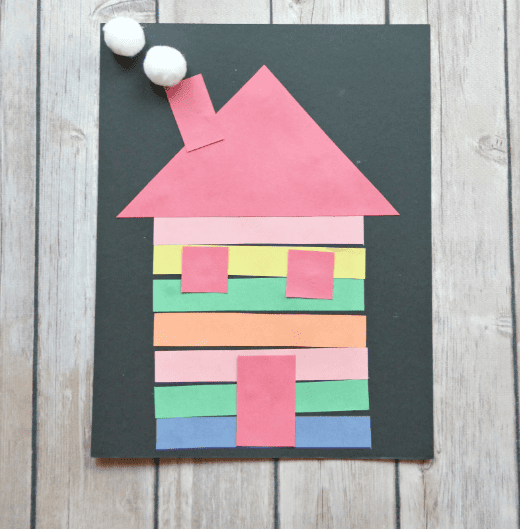
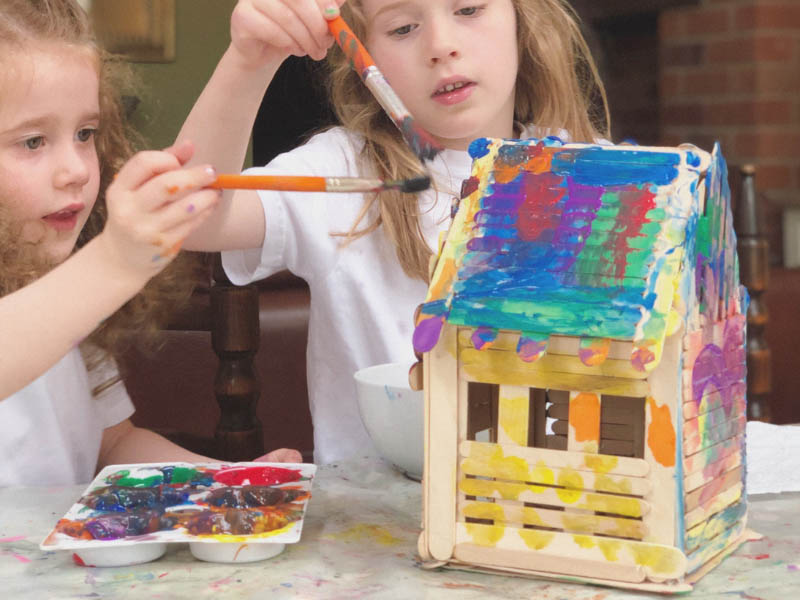
An art activity house functions as a structured spatial template that integrates physical construction, drawing, and coloring into a cohesive manipulative task for young learners. According to the National Art Education Association (NAEA), early engagement with structural visual arts and dimensional templates significantly enhances spatial reasoning, fine-motor coordination, and geometric comprehension in children. Early elementary classrooms and homeschool environments utilize these immersive printables to bridge the gap between flat two-dimensional rendering and three-dimensional structural design.
Visual Learning & Skill Snapshot:
- Core Focus: Structural papercraft and architectural drawing frameworks designed for children.
- Target Skill: Spatial reasoning, visual discrimination, fine-motor proportion, and concept mastery.
- Key Recommendation: Print templates on heavyweight cardstock to ensure structural stability during folding and coloring phases.
Core Principles and Learning Overview
Spatial representation begins when learners translate flat outlines into unified physical structures. Integrating targeted Art Activities into early curricula promotes bilateral coordination, as children must simultaneously hold, cut, fold, and shade complex templates. By engaging with an architectural framework, children decode perspective, proportion, and visual balance. Exploring structured Printable Crafts further reinforces fine-motor control through precision cutting and sequential assembly.
Key Specifications and Breakdown
| Age / Learning Stage | Visual Skill & Ratio | Pedagogical Application & Scaffolding |
|---|---|---|
| Ages 3-4 (Preschool) | Gross motor alignment, 1:1 color matching | Utilizing pre-scored thick outlines and large Coloring Pages for foundational dexterity. |
| Ages 5-7 (Early Elementary) | Bilateral cutting control, simple perspective | Assembling folding templates while integrating guided Drawing Worksheets for facade decoration. |
| Ages 8-10 (Advanced Primary) | Geometric visualization, intricate symmetry | Constructing multi-room architectural models requiring precise measurement and detailed surface rendering. |
Engagement with tactile construction materials and structured visual templates directly correlates with enhanced cognitive mapping and problem-solving capacities in early childhood development. — National Art Education Association (NAEA). Related guide: Drawing Worksheets Adults.
Step-by-Step Practical Application and Guidelines
Successful execution of dimensional art projects requires sequential preparation, beginning with printing the templates on appropriate cardstock rather than standard copy paper. Educators and parents should first guide learners through the surface design phase, encouraging detailed coloring and line drawing while the paper remains completely flat. Once surface elements are complete, introduce safety scissors for perimeter trimming along solid boundary lines. Finally, demonstrate proper mountain and valley folding techniques along dashed guidelines, securing tab edges with child-safe adhesive to complete the upright structure.
Common Challenges and How to Avoid Them
Structural collapse and misaligned folds occur most frequently when lightweight paper is selected instead of reinforced cardstock. To prevent frustration, instructors should pre-score fold lines using a dull stylus or the back of a craft knife before allowing children to crease the paper. Additionally, rushing the coloring phase prior to assembly often results in uneven shading; establishing a strict sequence where surface rendering strictly precedes cutting and folding ensures optimal aesthetic outcomes.
💬 Frequently Asked Questions
Conclusion and Next Steps
Integrating dimensional design challenges into daily educational routines fosters robust problem-solving skills and artistic confidence in growing learners. Educators and parents are encouraged to explore a rich collection of printable crafts to inspire the next creative building session.
Visual Reference Gallery