Introduction
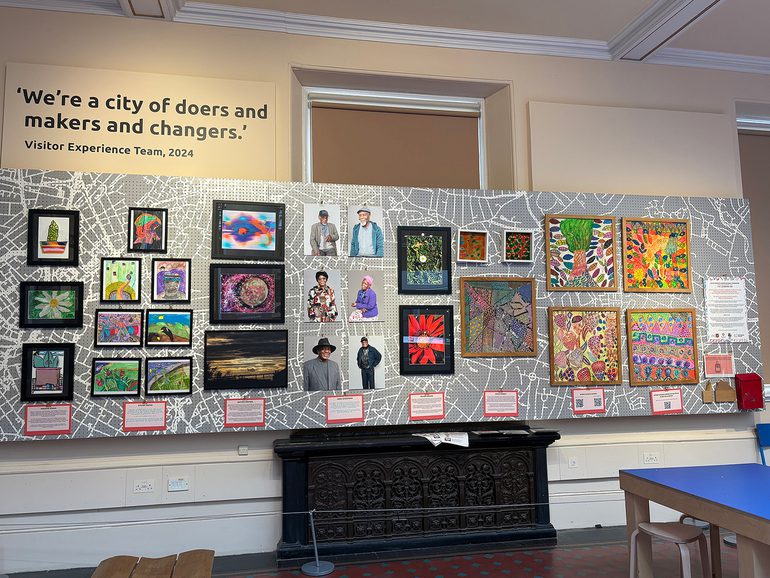
Art activities birmingham represent a structured framework of creative exercises, printable coloring sheets, and developmental drawing materials designed to enhance cognitive and motor skills in young learners. According to the National Association for the Education of Young Children (NAEYC), purposeful visual arts engagement actively supports children’s neurological development, spatial awareness, and emotional expression through tactile creation. Educators and parents seeking regional creative resources often look for structured curricula that integrate seamlessly with foundational Art Activities to foster early fine-motor control and creative problem-solving.
Visual Learning & Skill Snapshot:
- Core Focus: Structured printables and creative exercises promoting foundational fine-motor control.
- Target Skill: Spatial reasoning, visual discrimination, and hand-eye coordination.
- Key Recommendation: Pair structured templates with open-ended coloring materials to balance precision with creative freedom.
Core Principles and Learning Overview
Art activities birmingham encompass targeted printable resources that bridge the gap between structured geometric practice and free-form visual expression in early childhood education. Direct engagement with specialized Drawing Worksheets allows children to build pencil grip strength, understand spatial boundaries, and translate mental concepts onto physical surfaces. By integrating diverse creative mediums, educators help learners develop critical visual-spatial intelligence that translates directly into enhanced mathematical and reading readiness during the early elementary years.
Key Specifications and Breakdown
| Age / Learning Stage | Visual Skill & Ratio | Pedagogical Application & Scaffolding |
|---|---|---|
| Early Preschool (Ages 3-4) | Gross motor control, 1:1 color-to-area mapping | Utilizing bold-line Coloring Pages to establish boundary awareness and pencil grip. |
| Kindergarten (Ages 5-6) | Fine-motor precision, bilateral hand coordination | Implementing targeted tracing worksheets and Printable Crafts for scissor control. |
| Early Elementary (Ages 7-8) | Proportional scaling, structural perspective | Introducing advanced grid-based drawing templates and multi-step creative projects. |
The National Art Education Association (NAEA) advocates for sequential visual arts instruction that prioritizes observational skill-building, creative inquiry, and developmental progression over rigid mimicry. — National Art Education Association (NAEA)
Step-by-Step Practical Application and Guidelines
Effective implementation of art activities birmingham requires careful preparation of physical learning environments and the selection of age-appropriate printable assets. Educators should begin by organizing workspace materials, selecting high-contrast templates, and guiding children through proper ergonomic posture before pencil touches paper. Scaffolding the process from simple contour tracing to complex composition allows students to build confidence gradually without experiencing frustration.
Common Challenges and How to Avoid Them
Over-reliance on rigid templates without allowing for personal artistic interpretation often leads to student disengagement and diminished creative confidence. To prevent this, educators must combine structured geometric exercises with open-ended coloring variations that encourage individual choice regarding color palette and texture application. Providing consistent, process-oriented feedback rather than focusing exclusively on the final aesthetic outcome ensures sustained motivation and healthy cognitive development.
💬 Frequently Asked Questions
Conclusion and Next Steps
Integrating structured visual arts into early learning environments lays a robust foundation for lifelong cognitive flexibility and creative expression. Educators and parents are encouraged to explore the comprehensive collection of Art Activities available to enrich daily lesson plans and inspire young learners.
Visual Reference Gallery