Introduction
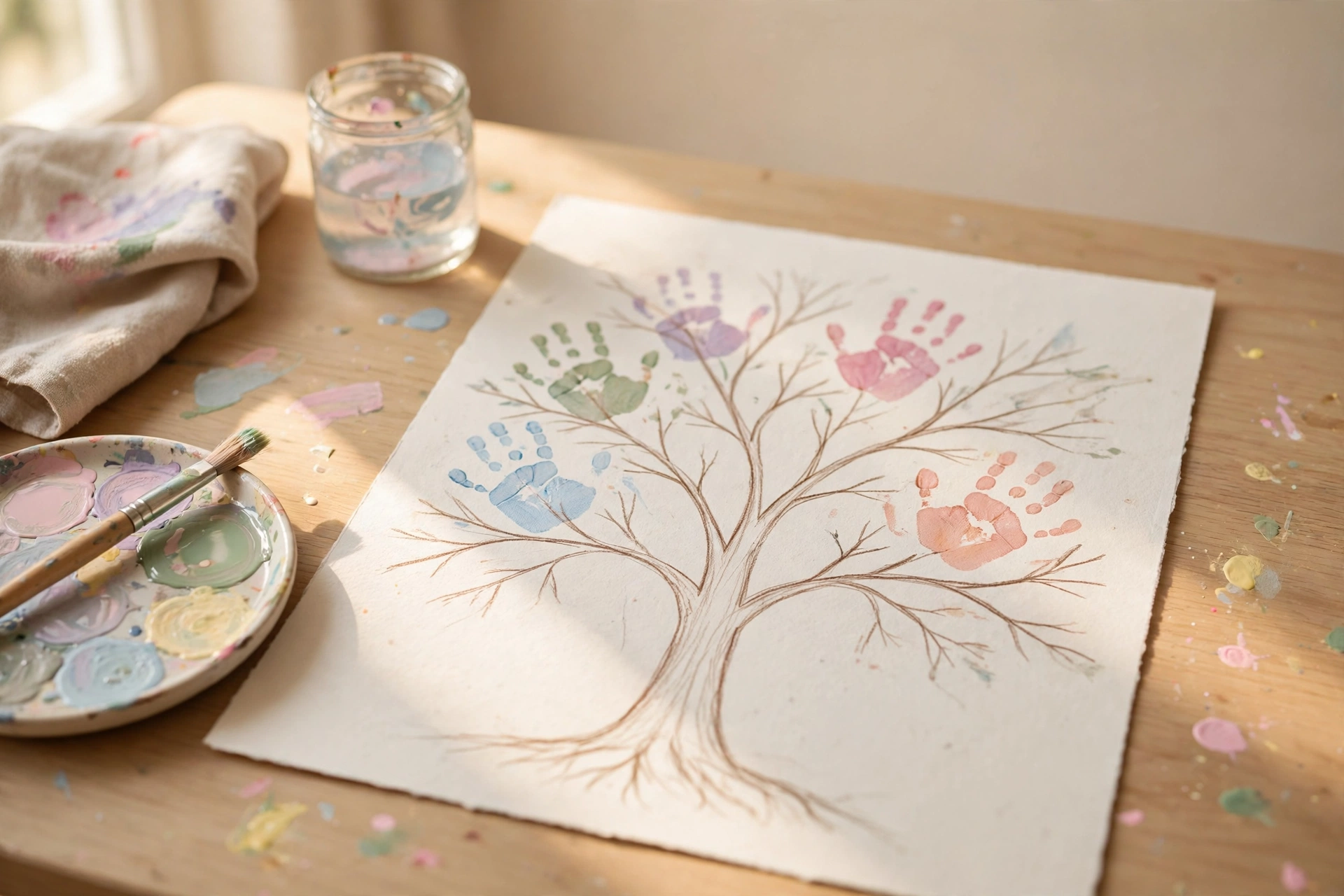
Art activities about family for preschoolers function as foundational exercises that merge socio-emotional development with early visual literacy. According to the National Association for the Education of Young Children (NAEYC), engaging young learners in creative family-focused projects significantly supports self-identity, fine motor coordination, and narrative expression. Utilizing structured Art Activities allows children to process domestic relationships while translating abstract emotional bonds into concrete graphical representations.
Visual Learning & Skill Snapshot:
- Core Focus: Family-themed creative projects that build emotional literacy and fine motor precision in young children.
- Target Skill: Spatial mapping, relational proportion, and symbolic self-portraiture.
- Key Recommendation: Combine open-ended drawing prompts with guided Drawing Worksheets to build confidence in scale and composition.
Core Principles and Learning Overview
Family-centric creative exercises provide a predictable, emotionally secure framework for children aged three to five to experiment with visual storytelling. Direct answer in first sentence: Integrating targeted Printable Crafts into daily routines teaches preschoolers how to map spatial relationships between family members, scale human figures according to perceived importance, and utilize color to convey emotional tone. Educators and caregivers leverage these tactile tasks to bridge the gap between internal emotional comprehension and observable artistic execution, reinforcing cognitive schema formation during early childhood development.
Key Specifications and Breakdown
| Age / Learning Stage | Visual Skill & Ratio | Pedagogical Application & Scaffolding |
|---|---|---|
| 3 Years (Early Pre-K) | Tadpole figures, circular head-mapping, unscaled relative positioning. | Use guided coloring sheets and thick-grip crayons to establish basic boundaries. |
| 4 Years (Mid Pre-K) | Emerging torso integration, intentional color choices for clothing. | Introduce simple mixed-media collage elements alongside structured tracing prompts. |
| 5 Years (Kindergarten Prep) | Baseline anchoring, multi-figure scaling, distinct facial features. | Implement independent portrait layouts and narrative-driven crafting tasks. |
Early childhood art experiences must prioritize expressive exploration over rigid replication, fostering spatial awareness and emotional regulation through tactile engagement. — National Art Education Association (NAEA)
Step-by-Step Practical Application and Guidelines
Executing structured family art lessons requires a balanced progression from observational discussion to physical creation. Direct answer in first sentence: Begin by displaying diverse Coloring Pages that depict varied family structures, prompting learners to identify distinct members before transferring observations onto blank drawing surfaces. Educators should supply diverse skin-tone mediums, textured papers, and blunt-tip safety tools, ensuring every child possesses the physical means to accurately reflect household dynamics without feeling constrained by realistic proportion standards.
Common Challenges and How to Avoid Them
Young learners frequently experience frustration when attempting to represent complex human anatomy or managing spatial crowding on standard paper formats. Direct answer in first sentence: Overcome spatial anxiety and scale distortion by breaking multi-figure compositions into separate, modular components before assembling them into a cohesive family portrait collage. Guiding children to draw individual family members on distinct slips of paper teaches scale control, spatial arrangement, and hierarchical positioning without inducing cognitive overload.
💬 Frequently Asked Questions
Conclusion and Next Steps
Integrating creative family projects into early learning environments bridges emotional processing with foundational fine motor milestones. Explore our curated selection of resources to support your young artists today.
Visual Reference Gallery