Introduction
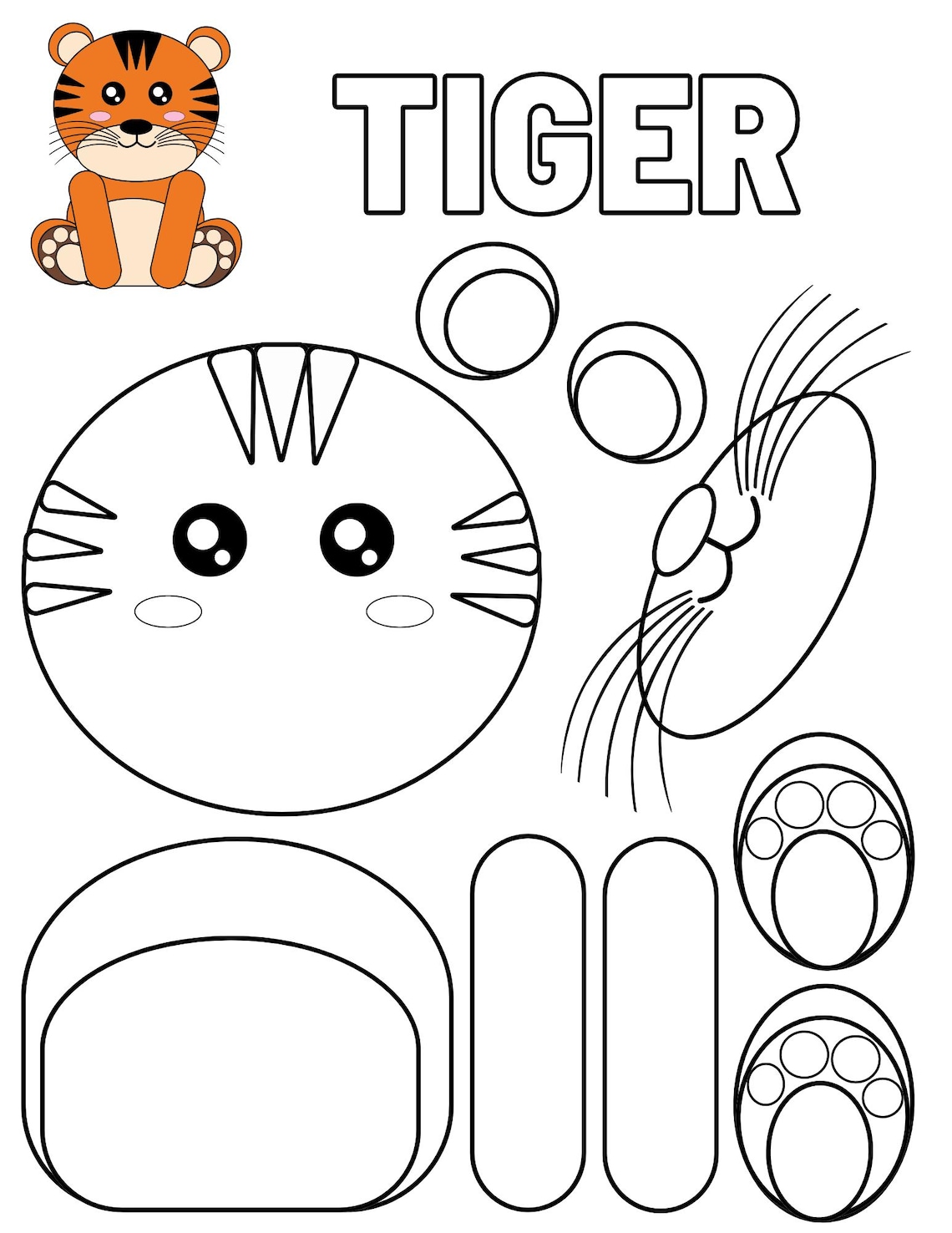
Printable crafts for kids pdf resources serve as structured, downloadable digital assets that facilitate multi-sensory art instruction, fine-motor skill development, and geometric spatial processing through paper folding, cutting, and assembly. According to the National Association for the Education of Young Children (NAEYC), purposeful manipulation of physical art materials during early childhood promotes critical neural pathways necessary for mathematical reasoning and bilateral coordination. Integrating these downloadable assets alongside structured Coloring Pages offers educators and caregivers a reliable method for fostering independent problem-solving and creative confidence in young learners. The digital nature of portable PDF templates ensures immediate access, consistent scaling, and limitless reproduction for diverse classroom environments and homeschool settings.
Visual Learning & Skill Snapshot:
- Core Focus: Portable, downloadable PDF templates designed for hands-on structural art creation.
- Target Skill: Bilateral motor integration, visual-spatial planning, and precise scissor control.
- Key Recommendation: Print templates on heavyweight cardstock to ensure structural stability during cutting and folding phases.
Core Principles and Learning Overview
Printable crafts for kids pdf templates bridge the gap between two-dimensional graphic processing and three-dimensional spatial construction by requiring children to interpret linear symbols, follow dashed cutting paths, and execute precise folding sequences. Visual arts education relies on sequenced art forms that transition children from basic mark-making to complex mechanical assembly. By pairing these structural projects with targeted Drawing Worksheets, educators can reinforce concepts of symmetry, contour mapping, and visual scale. The cognitive load required to translate a flat sheet of paper into a standing model stimulates working memory, spatial visualization, and sustained attention span across early elementary cohorts.
Key Specifications and Breakdown
| Age / Learning Stage | Visual Skill & Ratio | Pedagogical Application & Scaffolding |
|---|---|---|
| Ages 3-4 (Early Preschool) | Gross motor cutting, thick boundary recognition, 1:1 color matching. | Utilize thick, simplified outlines with minimal internal folding to build scissor confidence. |
| Ages 5-6 (Kindergarten) | Bilateral coordination, directional folding, spatial alignment. | Implement dotted-line fold guides paired with guided step-by-step visual sequencing. |
| Ages 7-8 (Early Elementary) | Complex geometric assembly, independent proportion scaling, structural planning. | Deploy multi-piece interlocking models that require sequential tabs and adhesive mapping. |
Art education experiences must be process-oriented and developmentally sequenced, ensuring that physical manipulation of materials supports both neurological wiring and expressive communication. — National Art Education Association (NAEA)
Step-by-Step Practical Application and Guidelines
Executing printable crafts for kids pdf projects successfully requires proper material selection, deliberate workspace preparation, and adherence to safe, ergonomic cutting techniques. Educators should begin by configuring printer settings to actual size (100% scale) to prevent distortion of critical tabs and alignment markers, using 65lb to 110lb cardstock instead of standard copy paper to guarantee durability. Instruct learners to color or paint all design elements before executing any cuts or folds, as working on a flat surface preserves fine motor control and prevents premature creasing. Introduce safety shears with rounded tips for early practitioners while explicitly demonstrating thumb-up hand positioning to foster correct muscle memory during the cutting phase.
Common Challenges and How to Avoid Them
Failing to account for paper weight and misinterpreting directional fold lines represent the most frequent obstacles encountered when implementing downloadable paper crafts in group settings. When children use standard bond paper, structural models often collapse under the weight of liquid glue or paint, frustrating the learner and interrupting cognitive engagement. Mitigate this by strictly enforcing cardstock specifications and pre-scoring heavy folds using a blunt tool or the back of a craft knife under adult supervision. Additionally, educators should provide physical demonstrations of mountain folds versus valley folds before allowing children to assemble complex multi-tab templates independently.
💬 Frequently Asked Questions
Conclusion and Next Steps
Implementing printable crafts for kids pdf in educational environments transforms passive digital consumption into active, tactile problem-solving that honors developmental milestones. By prioritizing process-driven engagement, proper material preparation, and thoughtful sequencing, educators build a solid foundation for spatial awareness and creative expression. Explore the growing library of professional resources, including engaging Printable Crafts designed to elevate visual learning in classrooms and homes alike.