Introduction
Art activities about transportation for preschoolers systematically combine mechanical concept exploration with foundational visual arts development to enhance spatial awareness and fine motor precision. According to the National Association for the Education of Young Children (NAEYC), engaging young learners in structured creative processes involving recognizable objects significantly accelerates cognitive mapping and symbolic representation. Educators and parents utilize thematic drawing, structured coloring pages, and tactile craft projects to bridge abstract mechanical concepts with concrete hand-eye coordination exercises. These multi-sensory experiences allow children to interpret motion, velocity, and structural geometry through line, color, and form. Integrating transport themes into early childhood curricula provides an accessible entry point for mastering basic shapes, proportion, and directional positioning.
Visual Learning & Skill Snapshot:
- Core Focus: Systematic integration of transportation themes into early childhood visual arts and tactile crafting.
- Target Skill: Spatial reasoning, directional visual tracking, and fine-motor pencil control.
- Key Recommendation: Combine tactile manipulation with structural coloring sheets to reinforce mechanical relationships.
Core Principles and Learning Overview
Art activities about transportation for preschoolers serve as a vital pedagogical bridge between physical environmental observation and abstract cognitive representation. Children naturally categorize moving objects such as trains, cars, airplanes, and boats, making transportation an ideal conduit for teaching symmetry, scale, and spatial orientation. Structured Art Activities prompt young learners to translate heavy machinery and dynamic movement into manageable visual components like circles, rectangles, and intersecting lines. This translation process strengthens bilateral coordination as children stabilize paper with one hand while executing controlled strokes with the other. Furthermore, exploring diverse modes of transit encourages visual discrimination, helping learners differentiate between aerodynamic curves of aircraft and rigid, blocky architectures of heavy-duty freight trucks.
Key Specifications and Breakdown
| Age / Learning Stage | Visual Skill & Ratio | Pedagogical Application & Scaffolding |
|---|---|---|
| Ages 3-4 (Early Exploration) | Gross motor line control; identifying basic geometric shapes within vehicles. | Utilize bold-outline Coloring Pages featuring simplified cars and buses to practice containment. |
| Ages 4-5 (Spatial Coordination) | Proportional scaling; understanding overlapping planes and directional motion lines. | Introduce guided Drawing Worksheets focusing on wheels, chassis, and windows. |
| Ages 5-6 (Advanced Constructing) | Bilateral cutting coordination; spatial assembly and 3D-to-2D conceptualization. | Deploy multi-piece Printable Crafts requiring precise folding and gluing of transport models. |
Early childhood art experiences must prioritize exploratory process over rigid product replication to foster authentic cognitive mapping and creative problem-solving skills in spatial organization. — National Art Education Association (NAEA). For more related activities, check out our Art Activities Bangkok.
Step-by-Step Practical Application and Guidelines
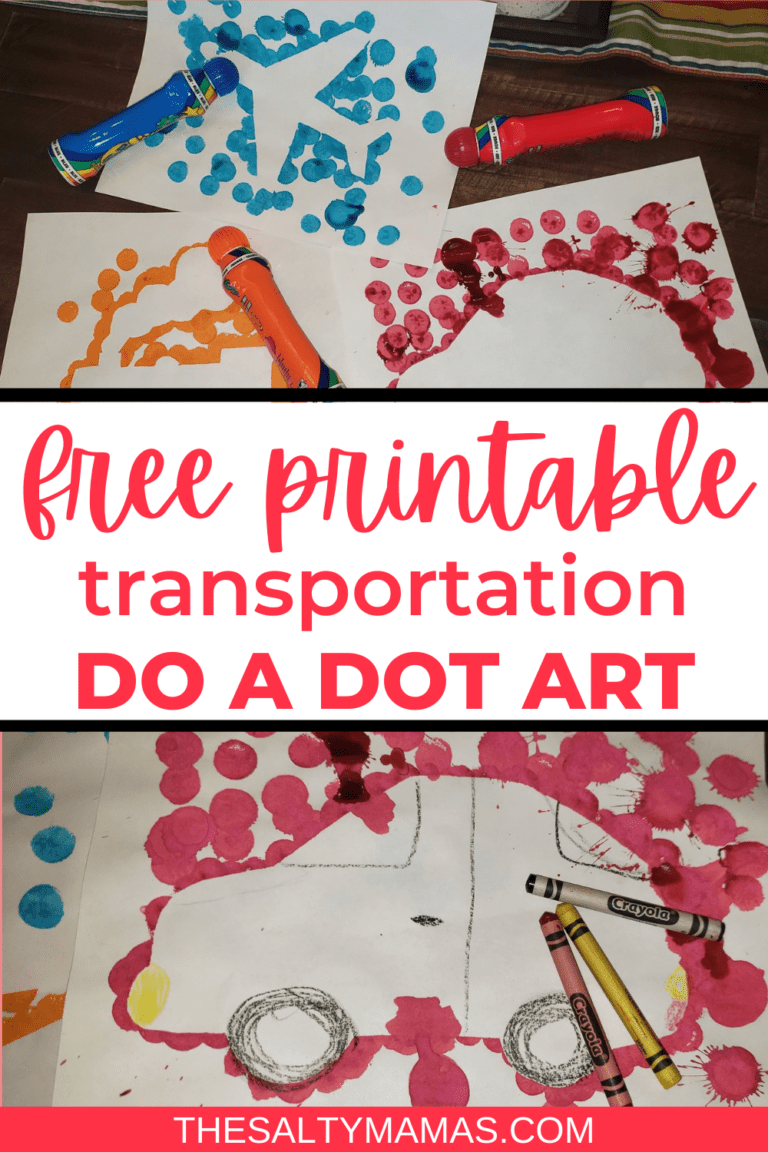
Implementing transportation-themed visual arts requires a deliberate progression from observation to physical creation and fine motor execution. Educators begin by introducing photographic references or physical model toys of varied vehicles, prompting children to identify key structural elements like wheels, wings, and steering mechanisms. Next, facilitators distribute pre-drawn outlines or printable templates, encouraging learners to experiment with color theory by associating specific hues with municipal, emergency, or recreational transport. Instructors guide pencil grip and hand pressure as children trace pathways, add background environments like roads and clouds, and decorate surfaces with patterns. Concluding the session with a reflective gallery walk allows children to articulate the mechanical function and visual characteristics of their completed masterpieces.
Common Challenges and How to Avoid Them
Young learners frequently encounter frustration when attempting to render complex mechanical proportions, such as symmetrical wheels or aligned airplane wings, purely from memory. Educators prevent this developmental roadblock by providing structured scaffolding templates that outline fundamental shapes before encouraging freehand embellishment. Another common hurdle involves rushing through coloring and cutting tasks, which compromises fine-motor skill development and spatial neatness. Instructors mitigate haste by establishing step-by-step visual checklists and breaking larger projects into distinct, manageable segments across multiple short sessions.
💬 Frequently Asked Questions
Conclusion and Next Steps
Embedding transportation themes into early childhood visual arts offers an exceptionally effective method for fostering spatial reasoning, fine motor precision, and creative expression. By connecting tangible mechanical objects with structured drawing and crafting exercises, educators and parents provide an engaging framework for lifelong cognitive development. To expand these learning opportunities further, explore the curated selection of educational Art Activities designed specifically to inspire young minds.
Visual Reference Gallery