Introduction
Activities art and craft encompass structured creative exercises that build foundational visual literacy, fine motor control, and spatial cognition in early childhood learners. According to the National Art Education Association (NAEA), intentional visual arts instruction during early development directly supports cognitive growth, problem-solving capabilities, and emotional expression. Utilizing structured Art Activities allows educators and parents to translate abstract concepts into tangible visual learning milestones.
Visual Learning & Skill Snapshot:
- Core Focus: Hands-on creative exercises merging fine motor practice with cognitive skill-building.
- Target Skill: Spatial reasoning, visual discrimination, and fine-motor control.
- Key Recommendation: Integrate structured printable media consistently to scaffold independent problem-solving.
Core Principles and Learning Overview
Structured activities art and craft frameworks bridge the gap between abstract creative exploration and deliberate neurological development. Integrating targeted Drawing Worksheets strengthens bilateral hand-eye coordination and precision grip, which are essential prerequisites for legible writing and advanced design comprehension. When children engage with linear boundaries, color gradients, and structural assemblies, the cerebral cortex forms critical neural pathways associated with visual-spatial organization and analytical thinking.
Key Specifications and Breakdown
| Age / Learning Stage | Visual Skill & Ratio | Pedagogical Application & Scaffolding |
|---|---|---|
| Ages 3-4 (Early Preschool) | Gross motor mark-making; 1:1 shape recognition | Utilize large-format Coloring Pages to build pencil grip confidence without restrictive boundaries. |
| Ages 5-7 (Kindergarten/Grade 1) | Bilateral coordination; spatial proportion | Introduce precise Printable Crafts requiring scissor accuracy and sequential folding. |
| Ages 8-10 (Early Elementary) | Perspective application; intricate design analysis | Deploy multi-step drawing matrices to foster independent artistic planning and critique skills. |
Early art and craft experiences are vital cognitive catalysts that strengthen executive function, visual tracking, and manual dexterity through purposeful physical manipulation. — National Art Education Association (NAEA)
Step-by-Step Practical Application and Guidelines
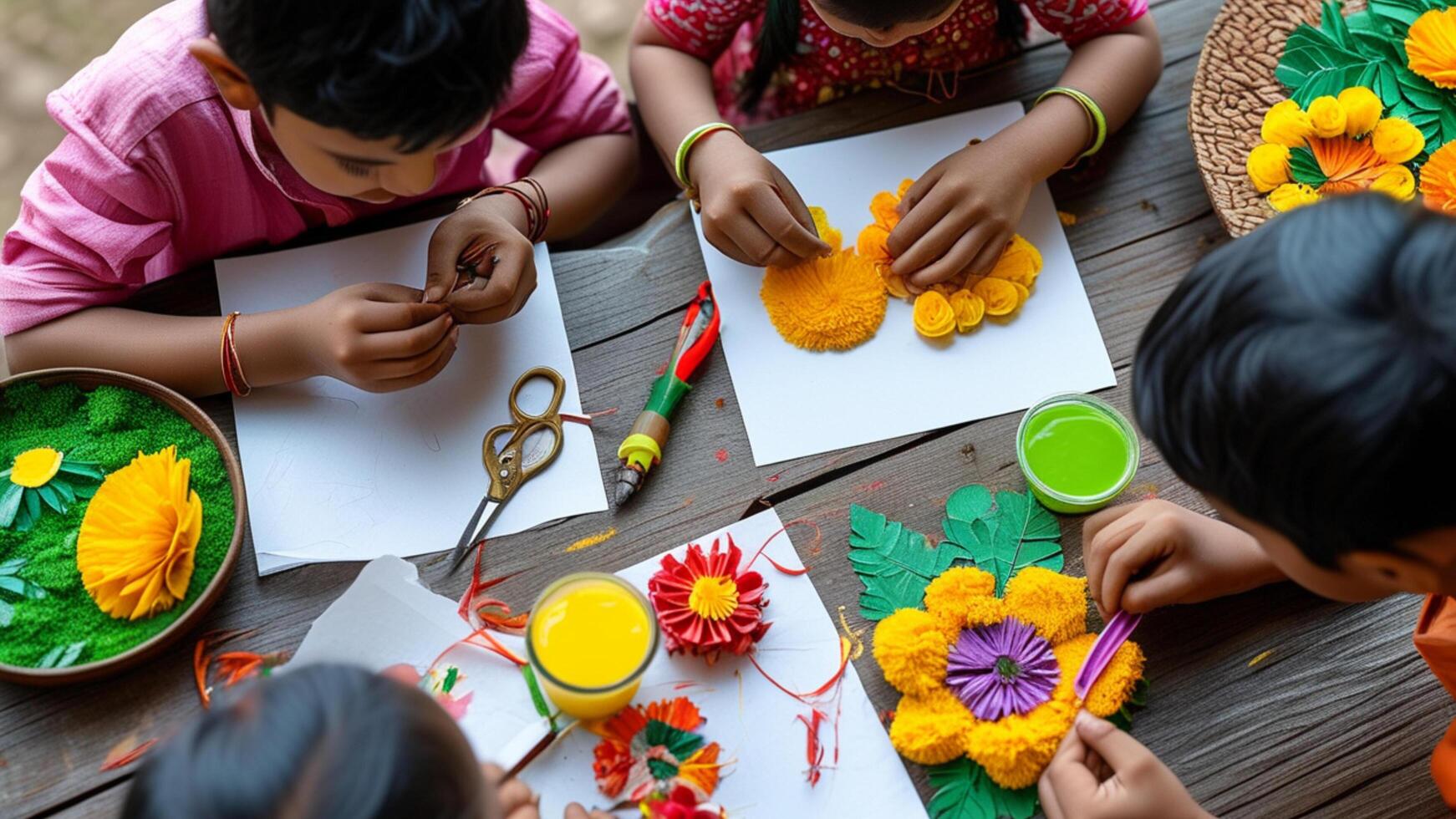
Implementing successful creative sessions requires preparing a distraction-free environment equipped with high-contrast printed media, blunt-tip safety scissors, non-toxic adhesives, and varied coloring mediums. Educators should first demonstrate tactile actions such as folding along a dashed boundary or shading within dense patterns before inviting children to replicate the steps independently. Rotating between structured worksheets and open-ended projects prevents sensory fatigue while maximizing sustained attention spans across varied developmental tiers.
Common Challenges and How to Avoid Them
Frustration during creative projects typically stems from mismatched motor expectations or overly complex visual instructions that exceed the learner’s developmental stage. Caregivers and teachers can mitigate this by scaling down task complexity, providing oversized grip tools, and treating accidental line-crossing or uneven folds as valuable problem-solving milestones rather than errors. Encouraging iterative practice helps young learners build resilience and self-correction abilities during complex crafting sequences.
💬 Frequently Asked Questions
Conclusion and Next Steps
Integrating reliable, structured creative resources into daily learning routines empowers children to explore visual concepts with confidence and precision. Explore our expansive collection of professional educational assets by visiting Art Activities to elevate the curriculum today.
Visual Reference Gallery