Introduction
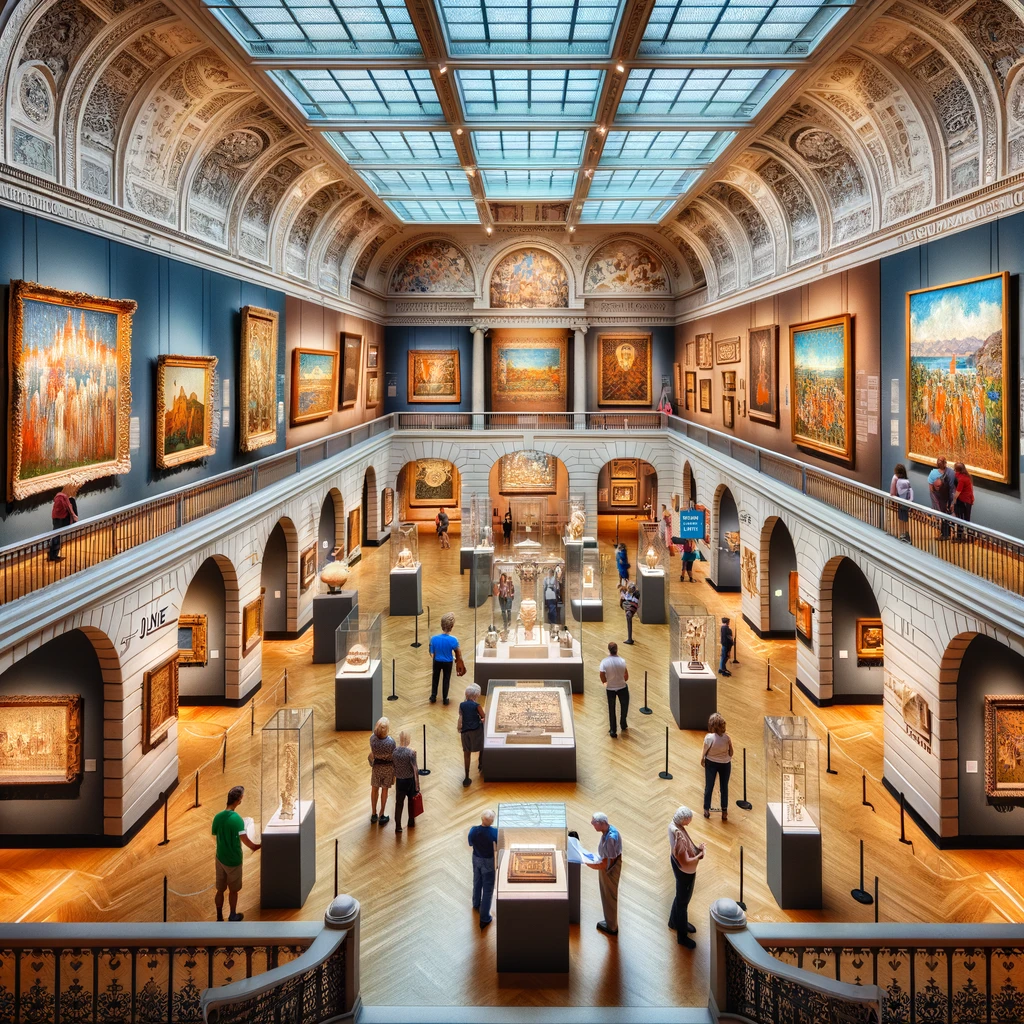
Art activities chicago programs and printable visual resources provide foundational cognitive scaffolds that enhance fine-motor precision, spatial intelligence, and early childhood literacy through structured creative exploration. According to the National Art Education Association (NAEA), sequential visual arts instruction directly strengthens cognitive flexibility, neural pathway development, and critical observational skills in young learners. Integrating museum-inspired motifs, local architectural elements, and urban cultural aesthetics into daily learning routines transforms standard drawing lessons into immersive geography and history experiences. Educators and parents seeking structured printable assets can easily source diverse materials through dedicated platforms featuring high-quality Art Activities designed for immediate classroom and home deployment.
Visual Learning & Skill Snapshot:
- Core Focus: Urban-inspired creative projects, printable worksheets, and structural drawing exercises.
- Target Skill: Spatial reasoning, architectural proportion, and fine-motor pencil control.
- Key Recommendation: Pair large-format structural outlines with step-by-step coloring and tracing sequences to build hand muscle memory.
Core Principles and Learning Overview
Visual arts education functions as a primary driver for cognitive growth by translating abstract spatial concepts into tangible tactile products. Art activities chicago frameworks leverage iconic urban landmarks, geometric skyscraper silhouettes, and local nature motifs to teach children perspective, symmetry, and scale. When children interact with structured Drawing Worksheets, the brain simultaneously processes visual input, tactile feedback, and motor planning. This multisensory integration accelerates hand-eye coordination, fosters patience, and encourages children to analyze complex shapes into manageable geometric components. Providing clear visual templates allows young learners to experiment with line weight, shadow distribution, and color theory without experiencing creative paralysis.
Key Specifications and Breakdown
| Age / Learning Stage | Visual Skill & Ratio | Pedagogical Application & Scaffolding |
|---|---|---|
| Early Years (Ages 3-5) | Gross motor control and color boundaries (1:1 ratio) | Utilize thick-line Coloring Pages focusing on simple skyline shapes and prominent local symbols. |
| Early Elementary (Ages 6-8) | Proportional scaling and perspective (2:3 ratio) | Introduce architectural grid drawing and symmetry exercises based on classic structural designs. |
| Upper Elementary (Ages 9-11) | Complex layering and dimensional depth (1:2 ratio) | Incorporate intricate Printable Crafts requiring precise cutting, folding, and multi-media assemblage. |
Quality visual arts education fosters divergent thinking, spatial perception, and fine-motor mastery by encouraging iterative problem-solving during physical creation. — National Art Education Association (NAEA)
Step-by-Step Practical Application and Guidelines
Executing structured art lessons requires careful preparation of physical environments, print materials, and sequential guidance. Begin by selecting themed templates that reflect regional architecture, park landscapes, or cultural motifs to anchor the lesson in recognizable surroundings. Print all activity sheets on heavy-weight cardstock to prevent bleed-through from markers and to provide adequate structural support for cutting and gluing. Introduce the activity by discussing the visual characteristics of the subject, prompting children to identify geometric shapes within the lines before applying color. Allow sufficient time for independent exploration, encouraging learners to experiment with overlapping mediums such as watercolor washes over oil pastel resist.
Common Challenges and How to Avoid Them
Young learners frequently encounter frustration when fine-motor demands exceed their current hand strength or when complex instructions overwhelm working memory. Prevent these setbacks by scaling the complexity of the printable asset to match the specific developmental stage of the child, substituting intricate cutting lines with broader geometric boundaries when necessary. Educators should avoid enforcing rigid color schemes or pre-determined aesthetic outcomes, as over-direction stifles autonomous creative problem-solving and dampens intrinsic motivation. Establishing a supportive, low-pressure studio environment ensures that children view mistakes as valuable iterations rather than failures.
💬 Frequently Asked Questions
Conclusion and Next Steps
Deliberate integration of structured visual arts programs cultivates essential fine-motor precision, spatial intelligence, and creative confidence in young learners. By combining culturally relevant themes with high-quality printable educational resources, parents and educators provide children with the foundational tools needed for lifelong academic and artistic success. Explore the curated professional collections available at ColorLeaf Studio to discover an extensive library of print-ready assets tailored for modern classrooms and homeschool environments.
Visual Reference Gallery